
Your garage door is the largest moving part of your home. It goes up and down over a thousand times a year. Springs are under massive tension. Cables support hundreds of pounds. And most homeowners never think about maintenance until something breaks.
Here’s the thing: regular maintenance prevents most garage door repair calls. A little attention once or twice a year keeps your door running quietly, safely, and reliably for decades.
So, how often should you service your garage door? Let’s break it down.
The Short Answer
For most Austin homeowners:
- DIY visual inspection and lubrication: Every 3-4 months
- Professional tune-up: Once a year
That’s the baseline. But your specific situation might call for more frequent attention.
Factors That Affect Your Maintenance Schedule

Not all garage doors need the same level of care. Here’s what influences how often yours needs service:
Usage Frequency
The average residential garage door cycles 3-5 times per day. That’s about 1,500 cycles per year. If you’re working from home and going in and out constantly, you might hit 3,000+ cycles. More use means faster wear and more frequent maintenance.
Door Age
New doors (under 5 years old) need less attention — their components are fresh and properly adjusted. Doors 10-15+ years old need more frequent checks as components approach the end of life.
Climate Conditions
Austin’s climate is tough on garage doors. Extreme heat (100°F+ summers) dries out lubricant fast. Humidity causes corrosion. Temperature swings stress metal components. Our doors need more maintenance than those in mild climates.
Door Type and Quality
Heavy wooden doors stress components more than lightweight aluminum doors. Builder-grade doors wear faster than premium models. Insulated doors have more moving parts.
Previous Problems
If your door has had issues — noisy operation, broken springs, balance problems — it probably needs more frequent monitoring.
DIY Maintenance Tasks (Every 3-4 Months)
These are simple tasks any homeowner can do:
Visual Inspection
Look at the springs, cables, rollers, and tracks. You’re checking for:
- Frayed or worn cables
- Rust on springs or hardware
- Cracked or chipped rollers
- Debris in tracks
- Loose bolts or brackets
Don’t touch the springs or cables — just look. If something looks wrong, call a professional.
Lubrication
This is the single most important DIY maintenance task. Apply a garage door-specific lubricant (not WD-40) to:
- Hinges
- Rollers (if metal, not nylon)
- Springs (light coating)
- Bearing plates
- Lock mechanism
In Austin’s heat, lubricant dries out in 8-12 weeks. That’s why we recommend every 3-4 months rather than annually.
Test the Balance
Disconnect the opener by pulling the release cord. Lift the door manually to about waist height. A properly balanced door should stay in place. If it falls or rises, the springs need adjustment — call a pro.
Test Safety Features
Place a 2×4 flat on the ground in the door’s path. Close the door. It should reverse immediately upon touching the board. If it doesn’t, you have a safety issue — call for repair services right away.
Clean the Tracks
Wipe down the inside of the tracks with a rag. Remove dirt, cobwebs, and debris. Don’t lubricate the tracks — the door should slide, not roll, on clean, dry metal.
Check Weatherstripping
Look at the rubber seal along the bottom and sides. Is it cracked, brittle, or missing sections? Damaged weatherstripping lets in water, pests, and outside air.
Professional Maintenance (Annual)
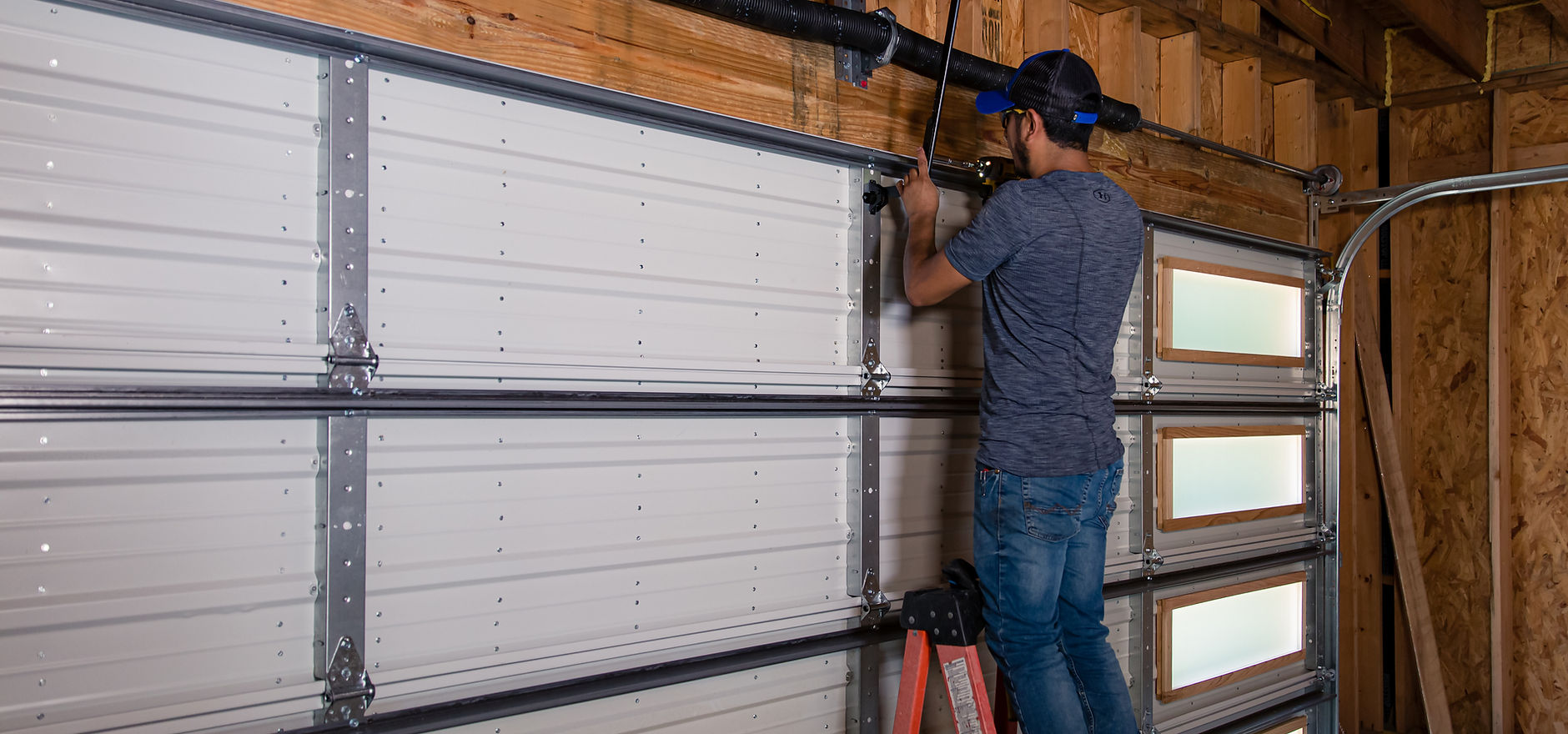
Some tasks require a trained technician with proper tools. We recommend a professional tune-up once a year that includes:
Spring Inspection and Adjustment
Springs lose tension over time. A technician can measure spring tension and adjust or replace springs before they fail. This is dangerous work — never attempt to adjust the spring yourself.
Cable Inspection
Frayed cables can snap without warning. A pro checks cable condition and attachment points that aren’t visible from the ground.
Opener Assessment
Your opener has moving parts that wear out — gears, belts, chains, and circuit boards. Annual inspection catches problems before they strand you.
Roller Evaluation
Worn rollers cause most garage door noise. A technician can assess roller condition and recommend replacement when needed.
Track Alignment
Tracks can shift over time, especially with Austin’s clay soil foundation movement. A pro ensures tracks are properly aligned and secured.
Sensor Calibration
Safety sensors can drift out of alignment. A technician verifies they’re working correctly and adjusts if needed. Sensor problems are a common cause of service calls, and annual tune-ups prevent them.
Hardware Tightening
Thousands of cycles loosen bolts and screws. A technician checks and tightens all hardware.
Austin-Specific Maintenance Considerations
Living in Central Texas means adapting your maintenance schedule:
Summer Heat
Lubricate more frequently in summer — every 2-3 months instead of 3-4. The heat accelerates lubricant breakdown.
Pollen Season
Cedar and oak pollen coat everything in spring. Clean sensor lenses monthly during pollen season to prevent sensor issues.
Storm Season
After major storms (especially hail), inspect the panels for damage and verify that the door is operating normally.
Foundation Movement
Austin’s clay soil causes foundation shifts that can affect your garage. If your door starts sticking or won’t seal properly, foundation movement might be the cause.
Signs You Need Service Now (Don’t Wait)
Some issues shouldn’t wait for scheduled maintenance:
- Door won’t open or close
- Loud banging, grinding, or scraping sounds
- Door is visibly crooked or off track
- Springs look stretched or broken
- Cables are frayed or loose
- Door reverses for no reason
- Opener runs, but the door doesn’t move
- Door falls instead of lowering smoothly
These are safety issues. Call for repair services immediately.
The Cost of Neglect vs. Maintenance
Here’s the math that convinces most homeowners:
| Item | Cost |
|---|---|
| Annual tune-up | $89-$150 |
| Emergency spring replacement | $250-$450 |
| Worn rollers are causing track damage | $300-$600 |
| Opener failure from lack of maintenance | $350-$800 |
| Premature door replacement | $1,500-$3,000+ |
A $100-150 annual tune-up prevents repairs that cost 3-10x more. It’s one of the best maintenance investments you can make.
Schedule Your Tune-Up
Ready to get your garage door maintained? Here’s what to do:
- Call us at 512-796-4985
- Schedule a tune-up online
- We inspect everything — springs, cables, rollers, tracks, opener, sensors, and hardware.
- We fix small issues before they become big problems
- You get peace of mind knowing your door is safe and reliable
All Points Garage Door & Repair serves North Austin, Round Rock, and all surrounding communities. Book a maintenance visit today.
